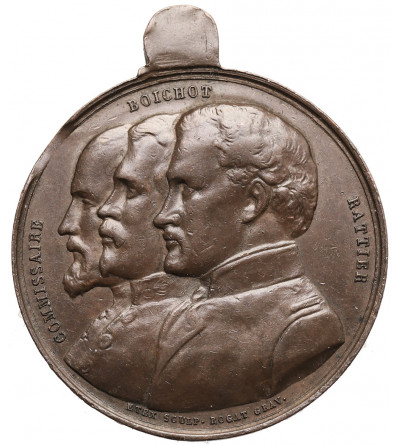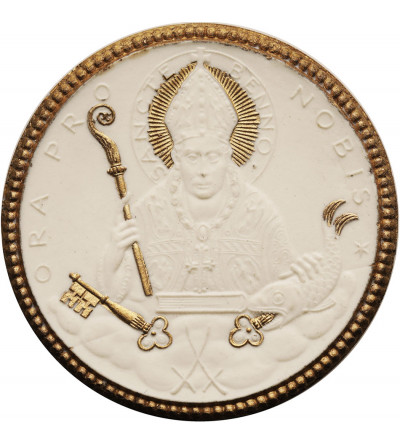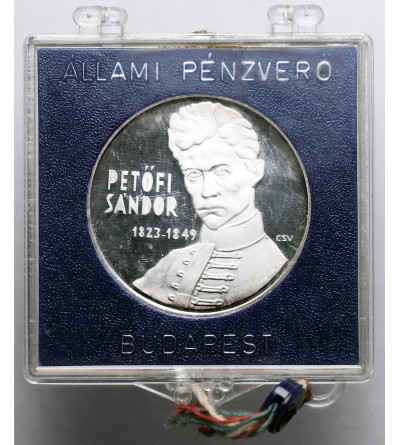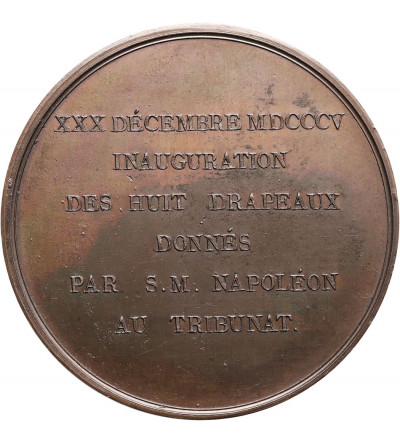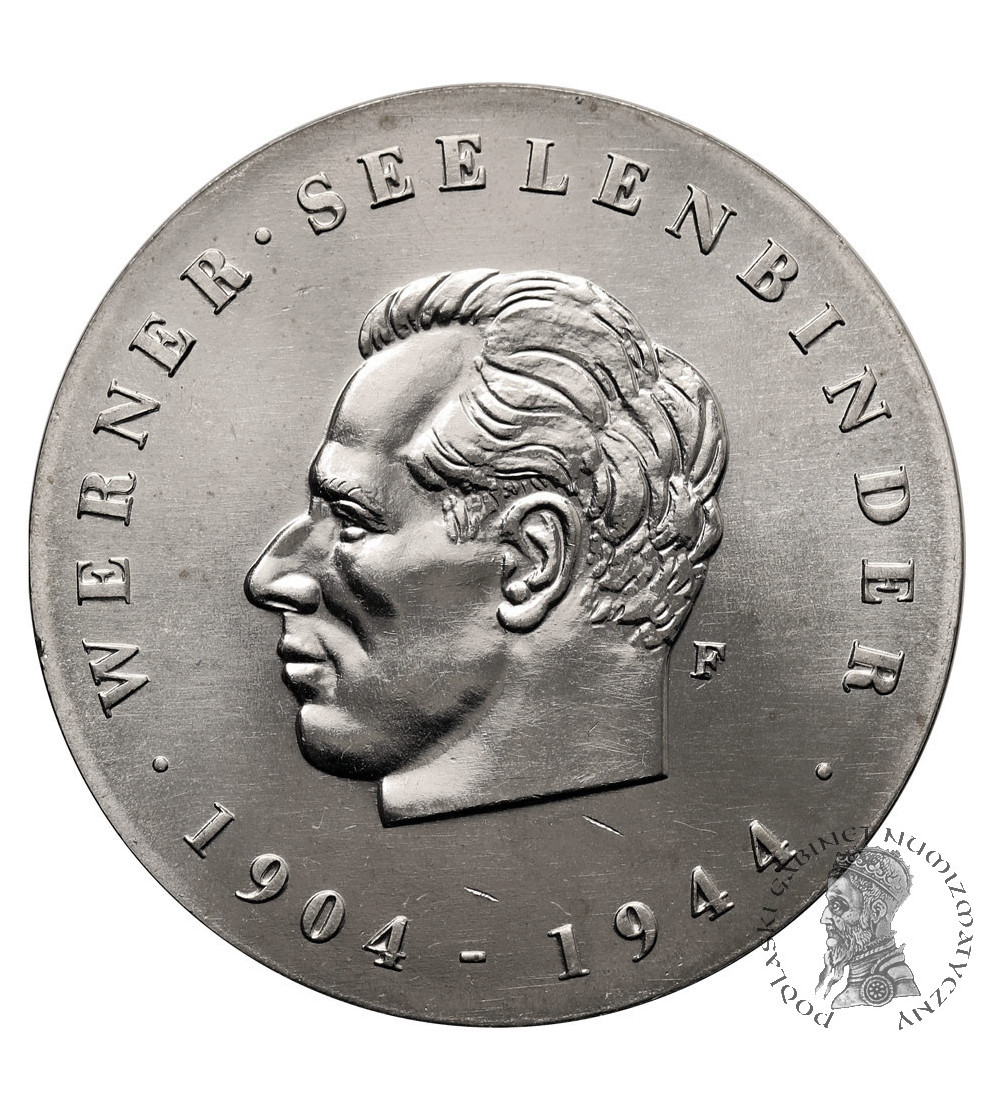
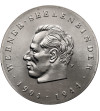
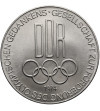
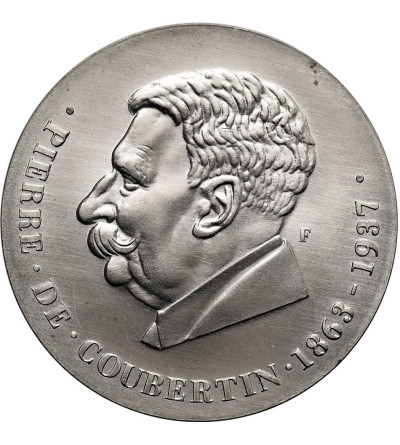
Germany, Democratic Republic (NRD/DDR). Olympic medal 1974 Werner Seelenbinder, Cu-Ni 40 mm, weight 24,70 g., Condition aUNC
(There are 16 other products in the same category)
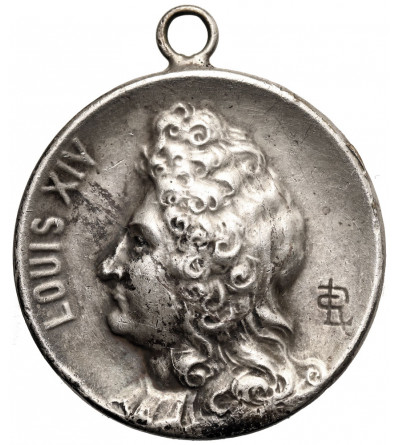
France, Louis XIV (1638-1715). Silver medal / jeton 1710, Claude Lemulier, Burgundy, Feuardent 9893, Silver 31,0 mm, weight 9,90 g., Condition XF, nice patina
Germany. Porcelain medal 1921 on the occasion of the 700th anniversary of the city of Löbau, Scheuch 1829, porcelain 37 mm, weight 9,68 g., Condition XF+
Israel, 50th Anniversary Medal of Hapoel Israel, 10th Hapoel Games, 1975. Obverse: Female runner, English and Hebrew legend, 50th Anniversary of the "Workers' Games". Reverse: Hapoel logo consisting of interlocking squares, silver? or silver-plated bronze?, 59 mm, weight 90,87 g., on the rim No. 792, Condition XF, patina
Belgium, East Flanders, Albert I (1909-1934). Medal 1928, J.B.Coorman, Bronze 65 mm, weight 119,90 g., Condition aUNC
Germany, Meissen. Porcelain medal "Tönendes Erz , Liebe beschert's" ("Sounding the ore, love bestows it"), 10 Mark 1921, porcelain 40 mm, weight 9,51 g., Condition XF+
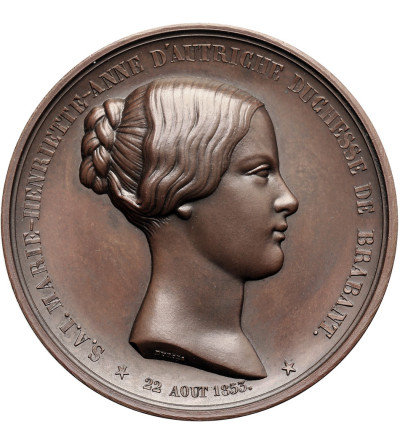
Belgium, Leopold I (1831-1865). Medal 1853, Leopold Duke of Brabant as a member of the Senate, by Dubois, Bronze 50 mm, weight 54,5 g., Condition XF, nice dark patina, beautiful mint gloss, minor surface and edge damage
Belgium, Prince Philippe of Belgium, Count of Flanders (1837-1905) . Medal circa 1840, LES VERTUS DE SA FAMILLE SE REFLETENT EN LUI ET NOUS LE FONT AIMER (THE VIRTUES OF HIS FAMILY ARE REFLECTED IN HIM AND MAKE US LOVE HIM), Bronze 50 mm, weight 47,40 g., Condition aUNC, beautiful brown patina with luster
The expression “The virtues of his family reflect in him and make us like him” expresses the idea that a person's positive qualities are influenced by the values and character traits of his family, and these family virtues make the person more likeable and lovable. In other words, the good qualities of the family are seen as manifested in the individual's behavior and character, which elicits the liking and appreciation of others.
Germany, Weimar Republic. Inflation medal 1923, by Eitz, Bronze 32 mm, weight 9,77 g., Condition XF+, patina
Obverse: in the foreground is a man comforting a crying woman (right) and holding a child (left)
In the background is a wall of blackberries
Reverse: below the legend is a boat sailing on water
Inscription:
AM 1.DEZEMBER 1923 KOSTETEN IN PAPIERMARK
1 PFUND BROT
260 MILLIARD.
1 PUND FLEISCH
3.2 BILLIONEN
1 GOLDMARK
1 BILLION
Sweden, Oscar I 1844-1859 (Joseph François Oscar Bernadotte), Medal 1818 minted by the University of Uppsala to honor Oscar I as Crown Prince, by Johan Salmson, signed SALMSON F., Bronze 50 mm, weight 74,0 g, Condition aUNC, beautiful patina
France. Medal Souvenir 1842, commemorating the death of Ferdinand Philippe, Duke of Orléans, Silver-plated Bronze 24 mm, weight 5,20 g., Condition aUNC
France, Napoleon I Bonaparte. Bronze medal commemorating Napoleon's reception aboard the Bellerophon, 1815, Webb & Brenet, Denon, Bramsen 1691, Julius 3431, Bronze 40 mm, weight 37,56 g., Condition aUNC, nice brown patina with lustre, green tarnish on the reverse in places, minor edge nicks.
Germany, Bavaria, Munich. Medal 1912 Max Olofs, Bavarian Fair in Munich (C. Poellath / Schrobenh), Berhart 276, Silver-plated Bronze 33 mm, weight 13,9 g., Condition UNC, gray patina
Belgium, Leopold I (1831-1865). Medal 1845 in honor of Eugène Sue for his publication “The Eternal Wanderer” (Le Juif errant), Belgian Liberals in recognition of Sue's French novel, by Hart, Turner 700, Bronze 54 mm, weight 82,10 g, Condition aUNC, nice patina
Germany, Frankfurt am Main. GLOCKENMETALL DOMBRAND 15 AUG 1867 medal, made of bell metal commemorating the fire of the cathedral, J.u.F. 1347, bronze metal 40 mm, weight 27,0 g., Condition aXF
France, Napoleon I Bonaparte. Bronze medal commemorating the Battle of Wagram, 1809, Manfredini, Milan Mint, Bramsen 862, Julius 2112, d'Essling 1243, Bronze 40 mm, weight 40,93 g., Condition aUNC, beautiful brown patina with luster.
Sweden. Medal commemorating a visit to the Solna Kyrka church, 44 mm silver, weight 39.09 g., signed on the rim, condition XF+, very nice gray patina. On the obverse view of the religious building, on the reverse the date 1923.6.8.
Solna Church (Swedish: Solna kyrka) is a so-called round church in Solna Municipality near Stockholm, Sweden. The oldest parts of the church are from the later 12th century, a Romanesque fortress church built in stone as a defensive stronghold of the village. Indeed, in this region of Sweden, Karelian raids were commonplace, as evidenced by the looting of the nearby town of Sigtuna in 1187. Although the church has retained most of its medieval exterior form, the church's interior decoration dates back to the 17th century. The building was restored in 1928.
A beautiful commemorative silver medal.
Germany, Democratic Republic (NRD/DDR). Olympic medal 1974 Werner Seelenbinder, Cu-Ni 40 mm, weight 24,70 g., Condition aUNC