Polski
 English


- New
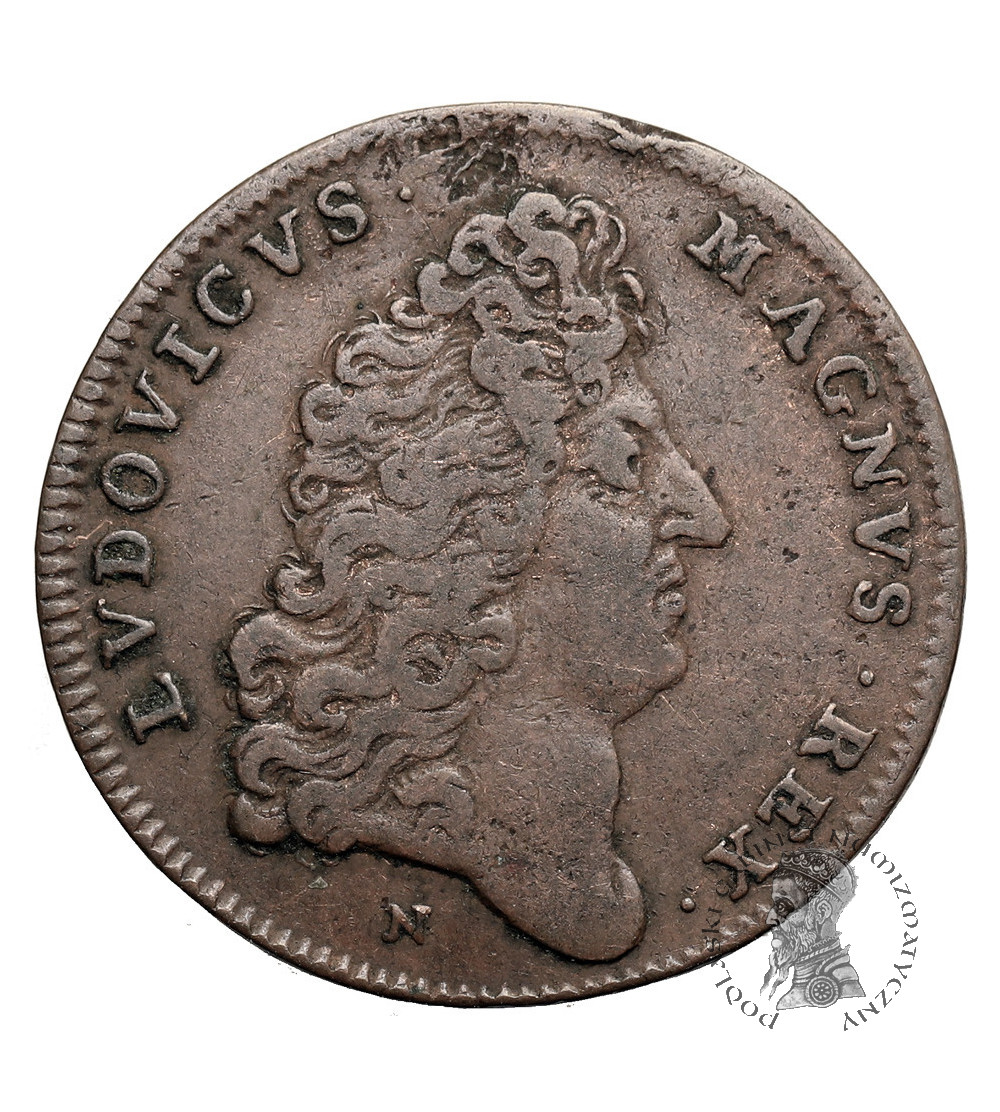
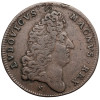
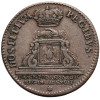
France, Louis XIV (1643–1715). Token from 1669, struck following the abdication of King John II Casimir, minted at the Montpellier mint after the king’s abdication when he became abbot of Saint-Germain-des-Prés, designed by Jacques Nilis, Obverse: Head of Louis XIV facing right and the inscription: LVDOVICVS/MAGNVS REX (N), Reverse: A crown; below, clasped hands on an altar and the inscription: CASIM POL REX ABDIC / REG IN GAL EXCIP; in a semicircle above, HOSPITIVM / REGIBVS; Brass 25 mm, weight 4,5 g., Feuardent 10479, H-Part 2336 (R4), Condition VF, patina
France, Louis XIV (1643–1715). Token from 1669, struck following the abdication of King John II Casimir, minted at the Montpellier mint after the king’s abdication when he became abbot of Saint-Germain-des-Prés, designed by Jacques Nilis, Obverse: Head of Louis XIV facing right and the inscription: LVDOVICVS/MAGNVS REX (N), Reverse: A crown; below, clasped hands on an altar and the inscription: CASIM POL REX ABDIC / REG IN GAL EXCIP; in a semicircle above, HOSPITIVM / REGIBVS; Brass 25 mm, weight 4,5 g., Feuardent 10479, H-Part 2336 (R4), Condition VF, patina
The Abdication of John Casimir Vasa
After a long war with Sweden from 1655 to 1660, the internal situation of the Polish-Lithuanian Commonwealth was dire. The war-torn country needed to be rebuilt, but new conflicts—including internal ones—could not be avoided. John Casimir had to contend with opposition from the magnates, who sought to strengthen their influence at the king’s expense, as exemplified by the rebellion led by Jerzy Lubomirski, who opposed the king’s alleged plans to introduce absolutism modeled on the French system (the king had very strong ties to France through his wife, Marie Louise).
The struggles with the rebels significantly undermined the king’s authority, which could no longer be restored. The queen’s death on May 10, 1667, was another blow to the monarch, who was isolated in his struggles and was giving increasingly serious thought to abdication. The decision to abdicate came as a surprise—and at times met with resistance—from a large portion of the nobility, even those who had previously been openly hostile toward John Casimir. The king, however, remained unyielding and on September 16, 1668, signed the relevant act of renunciation of the royal crown. Initially, he remained in the country, dividing his time between lavish entertainments and contemplation at the Camaldolese monastery in Bielany near Warsaw and at the Marian shrine in Sokal. Even before the election of Michał Korybut Wiśniowiecki, he left Warsaw for good and traveled to the estates in Żywiec that he had inherited from his mother.
After the election of the new king, he traveled to France, where King Louis XIV offered him hospitality. It is said that his decision to go into exile was influenced primarily by the fact that the newly crowned ruler of Poland was a former subject of John II Casimir, and the former king could not bear to live under his rule. In France, he received quite substantial ecclesiastical estates in return, and he chose as his residence the famous Abbey of Saint-Germain-des-Prés near Paris—one of the seven granted to him. Upon assuming the role of commendatory abbot (holding only the title and the right to income), he thus remained a layman, in addition to holding the previously conferred title of cardinal. The former king intended to marry the sister of his late wife, Anna, the widow of the Palatine of the Rhine, but his unexpected death prevented him from carrying out these plans.
Jan Kazimierz died on December 16, 1672, in Nevers as a result of a stroke or pneumonia. His solemn funeral was held there, and his heart was transferred to an abbey near Paris. On the initiative of John III Sobieski, the king’s body was brought back to Poland three years later, where it was laid to rest in the Vasa Chapel at Wawel Cathedral, next to his wife and their two children who had died young.
source: https://muzhp.pl/kalendarium/abdykacja-jana-kazimierza-wazy