Polski
 English



- New
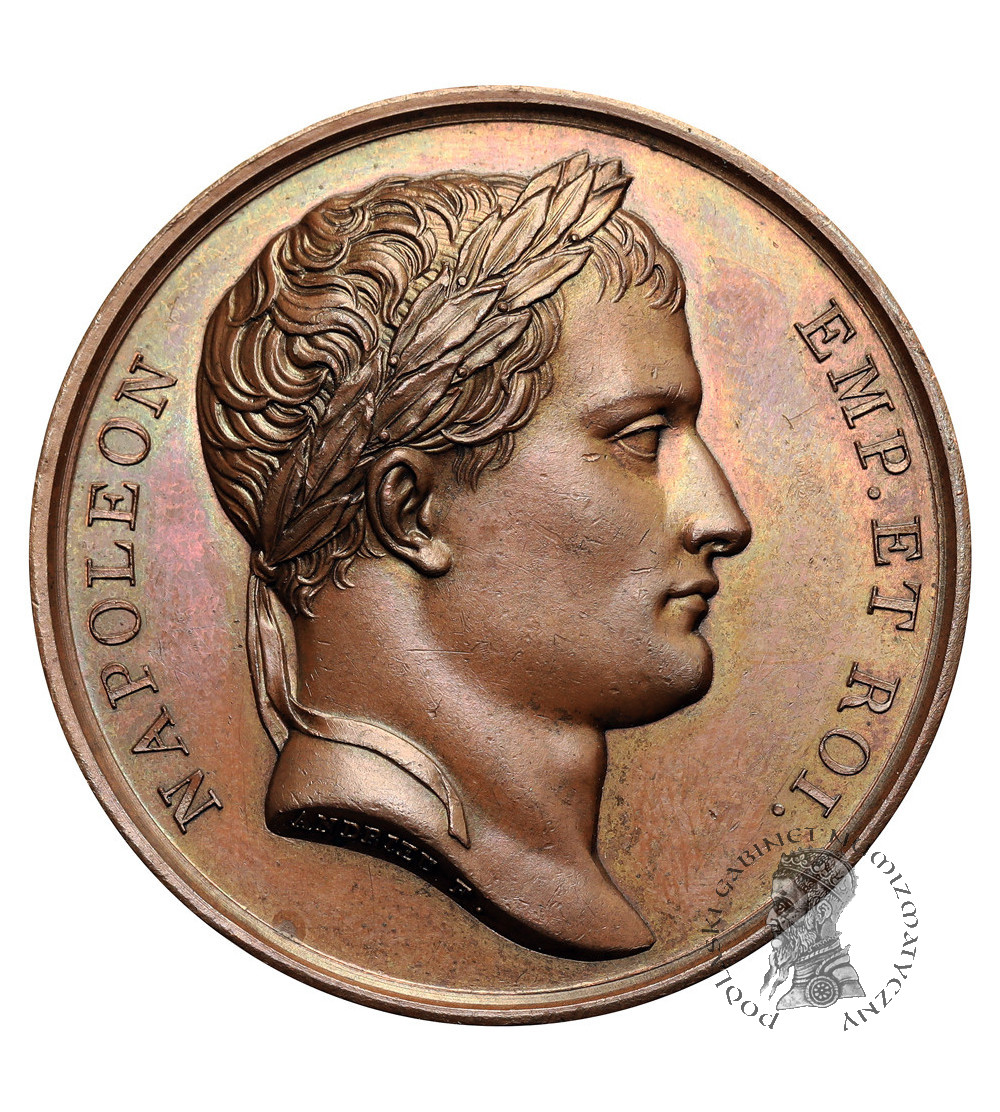
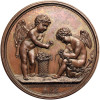
France, Napoleon I (1804–1814, 1815). Medal 1807 commemorating the marriage of Jérôme-Napoléon Bonaparte, King of Westphalia, to Catherine of Württemberg, by B. Andrieu, Denon, Bramsen 662, Zeitz 91, Julius Collection 1796, Essling 1185, Bronze 40 mm, weight 39,7 g., Condition aUNC, beautiful multicolor patina
France, Napoleon I (1804–1814, 1815). Medal 1807 commemorating the marriage of Jérôme-Napoléon Bonaparte, King of Westphalia, to Catherine of Württemberg, by B. Andrieu, Denon, Bramsen 662, Zeitz 91, Julius Collection 1796, Essling 1185, Bronze 40 mm, weight 39,7 g., Condition aUNC, beautiful multicolor patina
Obverse. Cupid hands Hymen, the god of marriage - recognizable by his torch - a flower (a rose) from a basket, from which Hymen weaves a wreath.
Hymen (also known as Hymenaeus or Hymenaios) is the ancient Greek god of wedding ceremonies, wedding celebrations, and the traditional wedding songs sung during the wedding procession. He presided over weddings and was invoked by name during the wedding procession. The ancient Greeks believed that Hymen had to be present at every wedding; if he did not appear, the union was considered doomed to failure or disaster. In art and literature, he is usually depicted as an exceptionally handsome, solemn young man or a winged youth (often among the Erotes), carrying a burning wedding torch and wearing a wreath of flowers, often roses.
Most accounts state that he is the son of the god Apollo and one of the Muses (often Calliope, Urania, or Clio), though other traditions regard him as the son of Dionysus and Aphrodite. A well-known legend from Attica describes him as a poor, handsome young man who fell in love with a wealthy Athenian girl. Disguised as a woman, he joined a group of girls traveling to Eleusis, where he helped them escape from pirates—thereby winning the girl’s hand in marriage and cementing his association with wedding celebrations.
source: wikipedia.org